

The Digital Sentinel: AI-Based Risk Assessment in Modern Oilfield Operations

Written by Dr.Nabil Sameh
Introduction
Navigating a High-Stakes Environment
The oil and gas industry operates at the frontier of human engineering, extracting vital resources from some of the planet’s most challenging environments. From the frozen tundra of the Arctic to the deep waters of the Gulf of Mexico and the complex geological formations of shale plays, these operations are inherently fraught with risk. Traditional risk assessment methodologies in oilfields have long relied on human expertise, historical incident data, periodic inspections, and standardized checklists. While valuable, these approaches are fundamentally reactive, episodic, and limited by human cognitive bandwidth. They often struggle to synthesize the vast, real-time data streams generated by modern operations into a coherent, predictive picture of emerging threats.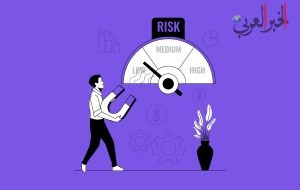
Enter Artificial Intelligence (AI). The convergence of advanced computing, ubiquitous sensor networks (the Internet of Things, or IoT), and sophisticated algorithms is catalyzing a paradigm shift from reactive risk management to predictive and prescriptive risk intelligence. AI-based risk assessment represents not merely an incremental improvement but a foundational transformation in how oilfield operators perceive, quantify, and mitigate danger. It functions as a digital sentinel, perpetually vigilant, analyzing patterns invisible to the human eye, and forecasting potential failures before they manifest into incidents. This article explores the theoretical architecture, core mechanisms, transformative benefits, and implementation challenges of deploying AI as the cornerstone of risk assessment in oilfield operations, envisioning a future where operational safety and efficiency are profoundly enhanced by machine intelligence.
The Theoretical Foundations: Data, Sensors, and the Digital Twin
The efficacy of any AI system is predicated on the quality and quantity of data it consumes. In the context of oilfield risk assessment, AI relies on a massive, heterogeneous data ecosystem fed by a dense network of sensors and systems.
• Data Sources: This includes real-time telemetry from downhole sensors (pressure, temperature, vibration), equipment health monitors (pump rates, valve positions, motor currents), environmental data (weather, seismic activity, wave heights), and process variables from production facilities. It also integrates historical maintenance records, geological and reservoir models, personnel location data, and even unstructured data like maintenance logs and procedural manuals.
• The Sensor Fabric: Modern oilfields are embedded with thousands of IoT sensors, creating a continuous pulse of operational status. This fabric provides the live feed necessary for AI to perform dynamic risk assessment, moving beyond static, schedule-based evaluations.
• The Digital Twin Concept: A pivotal theoretical construct is the Digital Twin—a dynamic, virtual representation of a physical asset (a drill string, a pump, an entire offshore platform) or process. The Digital Twin is continuously updated with real-time sensor data, allowing it to mirror the physical world’s state. AI algorithms interact with this twin, running simulations, stress-testing scenarios, and predicting future states under various conditions. This creates a safe, virtual sandbox for risk analysis, where potential failures can be studied and mitigation strategies can be tested without exposing personnel or assets to danger.
Core AI Methodologies for Risk Identification and Prediction
AI is not a monolithic technology but a suite of methodologies, each suited to different aspects of risk assessment.
• Machine Learning (ML) & Pattern Recognition: Supervised ML models can be trained on historical data where the outcomes (e.g., equipment failure, a well control incident) are known. These models learn the complex, often non-linear, precursors to such events. Once trained, they can analyze current operational data to identify similar early-warning patterns, predicting issues like drill bit wear, seal failure, or casing corrosion long before catastrophic breakdown. Unsupervised ML can detect novel anomalies—deviations from normal operational patterns that may indicate an emerging, previously unclassified risk.
• Computer Vision (CV): CV transforms visual data into risk intelligence. Drones or fixed cameras equipped with CV algorithms can perform perpetual inspections of infrastructure—identifying corrosion, cracks, leaks (via thermal imaging), or structural misalignations. They monitor compliance with Personal Protective Equipment (PPE) protocols, ensure safe zone adherence, and detect unauthorized access, thereby mitigating both technical and human-factor risks.
• Natural Language Processing (NLP): NLP unlocks insights from unstructured text. By analyzing maintenance reports, safety meeting minutes, incident descriptions, and operator notes, NLP can identify recurring concerns, latent procedural gaps, and cultural trends that quantitative sensor data might miss. It can correlate subjective human observations with objective machine data, providing a holistic view of systemic risk factors.
• Probabilistic Graphical Models and Bayesian Networks: These AI frameworks are explicitly designed for reasoning under uncertainty—a constant in oilfield operations. They can model the causal relationships between various risk factors (e.g., “high pressure” and “valve fatigue” may increase the probability of a “leak”). By continuously updating probabilities as new data streams in, these networks provide a quantifiable, evolving risk score for different system components or entire processes.
The AI Risk Assessment Framework: From Data to Decision
The integration of these methodologies forms a continuous, iterative risk assessment framework:
• Data Fusion and Normalization: Raw data from disparate sources is ingested, cleaned, and contextualized into a unified information model. This step is critical, as AI’s insights are only as good as the data it receives.
• Real-Time Monitoring and Anomaly Detection: The AI system establishes a dynamic baseline of “normal” operation. It continuously compares live data against this baseline, flagging anomalies with associated confidence levels. An unusual vibration pattern in a compressor, for instance, is immediately highlighted.
• Predictive Analytics and Prognostics: Moving beyond detection, the system predicts the future trajectory of an anomaly. Using ML models and Digital Twin simulations, it estimates the Remaining Useful Life (RUL) of equipment and forecasts the time-to-failure or the likelihood of a specific hazardous event (e.g., a blowout) under current operational parameters.
• Risk Quantification and Prioritization: AI assigns a dynamic risk score to each identified threat, synthesizing the predicted probability of occurrence with the estimated severity of consequences. This creates a constantly updated risk matrix, allowing operators to prioritize interventions based on a data-driven hierarchy of criticality.
• Prescriptive Recommendations: The most advanced systems offer prescriptive guidance. They don’t just say “Pump A will fail in 48 hours with 85% probability”; they suggest optimal mitigation actions, such as “Reduce flow rate by 15% and schedule maintenance within 36 hours to avoid unplanned downtime and safety hazards.” This closes the loop from insight to action.
Transformative Impact on Safety and Operational Resilience
The theoretical advantages of this AI-driven approach are profound:
· Proactive vs. Reactive Posture: The shift from finding failures to forecasting them enables preventative maintenance and pre-emptive safety shutdowns, fundamentally preventing incidents rather than responding to them.
· Enhanced Human Expertise: AI acts as a force multiplier for human engineers and safety officers. It handles the relentless task of monitoring data streams, freeing experts to focus on high-level interpretation, strategy, and complex decision-making where human intuition and experience are irreplaceable.
· Holistic Systemic View: AI can correlate risks across domains that are traditionally siloed. It might reveal, for example, that a particular drilling parameter (geotechnical) increases stress on a surface valve (mechanical), which, combined with an incoming storm (environmental), creates a compound risk of release that would be missed by domain-specific analyses.
· Continuous Learning and Adaptation: Unlike static procedures, AI systems inherently improve. Every new data point, incident, or near-miss refines the models, making the risk assessment engine more accurate and attuned to the specific characteristics of the asset over time. This builds institutional knowledge that is retained despite workforce changes.
Critical Challenges and Implementation Considerations
Theoretical promise must be tempered with practical realities. Deploying AI for risk assessment presents significant challenges:
· Data Quality and Infrastructure: The axiom “garbage in, garbage out” is paramount. Inconsistent, incomplete, or uncalibrated sensor data will lead to flawed predictions. Establishing robust data governance and the telecommunications infrastructure (often in remote locations) to handle massive data flows is a foundational prerequisite.
· The “Black Box” Problem: Many powerful AI models, particularly deep learning, are opaque in their decision-making. In an industry with severe consequences for error, the inability to explain why the AI flagged a specific risk can hinder trust and regulatory acceptance. Developing Explainable AI (XAI) techniques is therefore a critical area of theoretical and applied research.
· Integration with Legacy Systems: Oilfield operations often involve decades-old equipment and control systems not designed for AI integration. Bridging this digital-physical divide requires significant engineering effort and investment.
· Cybersecurity Risks: A highly interconnected, AI-dependent operation presents a larger attack surface. Securing the data pipelines, AI models, and control interfaces from malicious interference becomes a risk assessment priority in itself.
· Human-Machine Interaction and Cultural Adoption: The ultimate goal is a synergistic partnership. Overcoming cultural resistance, training personnel to interpret AI outputs critically (not blindly), and redesigning workflows to incorporate AI recommendations are human-centric challenges as complex as the technology itself.
The Future Horizon: Towards Autonomous Risk Management
Looking forward, the trajectory points toward increasingly autonomous risk management systems. We can envision:
· Self-Optimizing Systems: AI that not only assesses risk but automatically adjusts operational parameters in real-time to maintain safety within an optimal envelope—a form of continuous, automated process safety management.
· Swarm Intelligence: Networks of AI agents, each monitoring a specific subsystem, collaborating to assess and manage emergent, system-wide risks that no single agent could comprehend.
· Generative AI for Scenario Planning: Using generative models to create and simulate millions of potential risk scenarios, including rare “black swan” events, to stress-test safety systems and develop robust contingency plans for situations never before encountered.
· Cognitive AI for Procedural Compliance: Advanced AI that understands context and can guide complex, non-routine operations (like well interventions) in real-time, ensuring procedural steps are followed and flagging potential human error before it occurs.
Conclusion
The integration of Artificial Intelligence into oilfield risk assessment marks a decisive move from a paradigm of hindsight and periodic review to one of foresight and perpetual vigilance. Theoretically, it represents the maturation of operational safety into a predictive science. By harnessing the power of data, machine learning, and simulation through constructs like the Digital Twin, AI offers the potential to not only dramatically reduce the frequency and severity of catastrophic incidents but also to enhance operational efficiency and asset integrity. While significant challenges in data quality, explainability, integration, and human factors remain to be fully navigated, the theoretical framework is clear and compelling. The future of oilfield safety lies not in replacing human judgment, but in augmenting it with a powerful, tireless, and ever-learning digital sentinel—one that empowers the industry to navigate its inherent perils with unprecedented confidence and control. The journey toward this future is as much about cultivating a culture of innovation and trust as it is about deploying advanced algorithms, promising a new era of resilience in one of the world’s most critical and challenging industries.
Written by Dr.Nabil Sameh
-Business Development Manager (BDM) at Nileco Company
-Certified International Petroleum Trainer
-Professor in multiple training consulting companies & academies, including Enviro Oil, ZAD Academy, and Deep Horizon , Etc.
-Lecturer at universities inside and outside Egypt
-Contributor of petroleum sector articles for Petrocraft and Petrotoday magazines, Etc.